
Avoiding Blind and Window Clashes
Fitting Blinds to Inward-Opening Windows: What's the Smart Solution to this Design Dilemma?
Inward-opening windows – often called tilt-and-turn systems – are fast becoming a favourite among architects and developers across the UK.
Driven by modern building codes, energy standards, and the influence of European design, these windows are praised for their performance and practicality. They offer controlled ventilation, better security, easier cleaning, and excellent airtightness when closed.
But for all their technical advantages, they bring one unexpected headache: how to fit blinds without getting in the way of the window.
Why These Windows Are on the Rise
Across Europe, inward-opening windows have been the standard for decades – partly because external shutters handle solar shading duties. In the UK, however, the concept is still relatively new, but growing fast.
Tilt-in windows allow secure, passive ventilation while keeping out rain and road noise. Meanwhile, the side-turn function provides full airflow and safe cleaning access from inside – a real benefit for multi-storey buildings or restricted-access urban façades.
Yet as anyone who’s tried to add blinds or curtains knows, this clever inward movement creates a very real clash between your architectural dream and interior fit-out practicalities.
The Coordination Challenge
From a design perspective, the most elegant place to fit blinds is within the window reveal. It’s discreet, integrated, and maintains a clean line between wall and glazing.
Unfortunately, that’s also the exact space the window sash needs to occupy when it opens inward. Even with the blind fully retracted, the top cassette or roller housing typically projects just far enough to obstruct the swing of the window – or worse, the two collide.
And on full-height glazing or tall apertures, there’s even less space to play with. The result? A frustrating choice between good detailing and practical functionality.
Tried, Tested… and Troublesome Workarounds
Over the years, manufacturers have proposed two main fixes. Neither is perfect.
1. Blinds fixed directly onto the sash.
At first glance, this seems clever – the blind moves with the window, avoiding contact. But it introduces new problems:
Handles, seals, and reveals can get in the way.
Most standard blind systems are too heavy for the hardware.
Lightweight alternatives often compromise durability and performance.
Motorised or tensioned blinds are usually incompatible.
Plus, warranties and certification can become a grey area when you modify the window assembly.
2. Mounting the blind box above the reveal, on the wall.
This keeps the sash clear, but comes at a cost:
The blind hangs several centimetres in front of the glass, creating visible light gaps.
Privacy, acoustic and thermal benefits can also be reduced.
Installation gets messy – drilling through plasterboard and lintels, coordinating multiple trades, and patching up afterwards.
The need for a pelmet or visible gap above the window limits design freedom.
In short, both approaches feel like compromises – and for architects chasing crisp detailing and reliable operation, “almost works” isn’t good enough.
A Smarter Solution: BlindSet
That’s where BlindSet changes the picture.
This new British innovation takes a completely different approach: rather than trying to work around the problem, it builds the solution into the ceiling.
BlindSet is a ceiling-recessed blind system designed to integrate directly into MF (metal furring) or metal stud ceiling grids. The blind cassette sits within a pre-formed recess, allowing the fabric to retract completely out of sight – above the window head and clear of the inward-opening sash.
When lowered, the blind drops in perfect alignment with the glazing. When raised, it’s virtually invisible.
Why It Works
By rethinking where the blind lives, BlindSet eliminates every traditional drawback:
Full window movement: Tilt-and-turn or full-height windows can open freely without obstruction.
Clean architectural lines: The ceiling and glazing remain visually uninterrupted – ideal for contemporary interiors.
Superior light control: The blind sits flush with the glazing line, preventing the light leakage common with wall-mounted blinds.
Future-proof detailing: Fully compatible with plasterboard or suspended ceilings, motorised operation, and smart-home systems.
Fast, clean installation: Off-site built pods connect directly to ceiling grids. No drilling, no dust, no decorator call-backs.
In essence, BlindSet turns the blind from an accessory into an integrated building element – one that aligns perfectly with modern design intent and construction logic.
Building Smarter, Not Harder
As buildings become more efficient and window systems more advanced, it’s only logical that interior shading evolves too.
For too long, blinds on inward-opening windows have been an awkward compromise between usability and aesthetics. BlindSet resolves the issue not by tweaking the blinds, but by rethinking their integration with today's construction methods.
For architects and designers, it means cleaner detailing and greater design freedom.
For developers and clients, it means faster installation, fewer snags, and a better occupant experience.
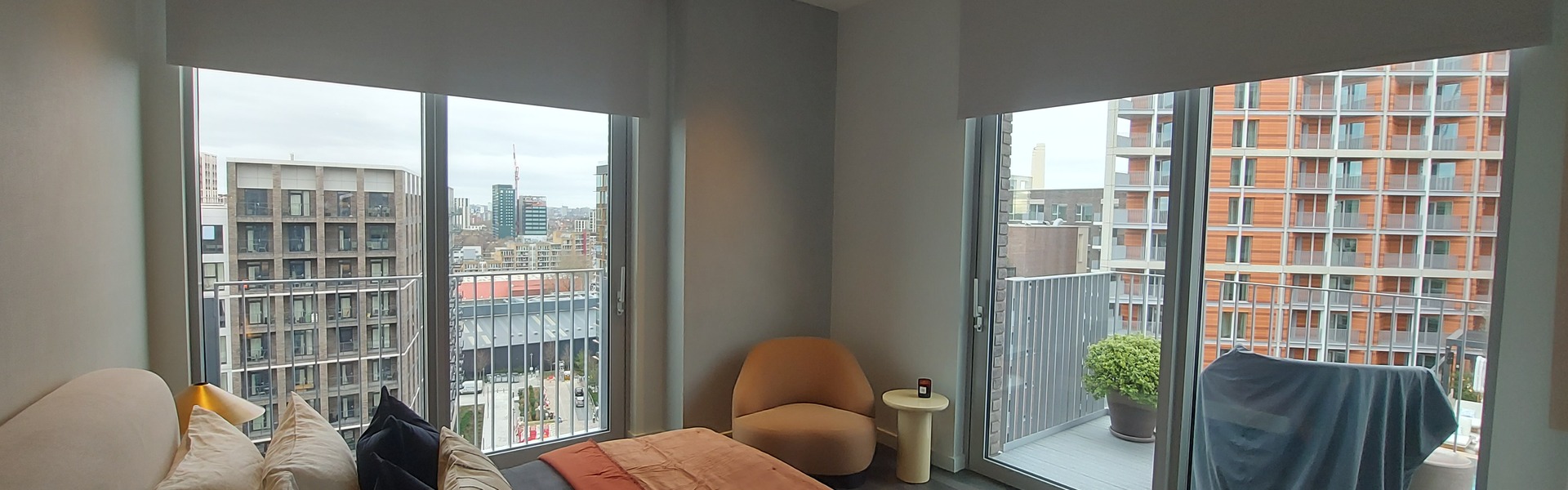
Inward-opening windows may have changed the way we think about passive ventilation. BlindSet is now changing how we think about passive shading
- Hugh McCreadie.
_____________________________________